
a
Top 10 Cloud Providers

Companyons

AllCode wrote software and provided DevOps support for Kyber.me. Kyber started off as an iOS mobile application similar to Things. Kyber then pivoted into the Slack task management space. Kyber is listed on the Slack App Directory here.

Kyber is the only all-in-one app to perfectly coordinate your teamwork and automate your workflows without leaving Slack. Within Kyber’s chatbot, you can:

• Manage entire projects inside Slack #channels
• Assign, schedule and complete tasks
• Use #channels as Kanban board to tack project progress
• Schedule and preview messages for later
• Automatically send recurring messages
• Run daily standup meetings to keep the team up-to-date
• Make decision faster with polls
• Easily decide the best time for a meeting

For Kyber, we wrote the iOS Objective-C code in XCode. We developed the backend in Ruby using RubyMine. The backend made use of Postgres, Redis, and Sidekiq. We wrote the Front End UI in Angular. The Slack app was designed to integrate with Slack Enterprise Grid. The Slack app supports three different licensing models within Slack: Free, Team, and Enterprise Grid.
iOS App

Related Articles

Building an AI-Powered Communication Hub

Building an AI-Powered Communication Hub

Your customers reach out through SMS. Through email. Through WhatsApp. Through web chat.

Your team responds through… spreadsheets? Disconnected inboxes? Maybe a CRM that sort of ties things together?

Meanwhile, each channel has its own queue, its own response time, its own tribal knowledge about how to handle common questions. Customer context gets lost between channels. Response quality varies wildly depending on who’s working.

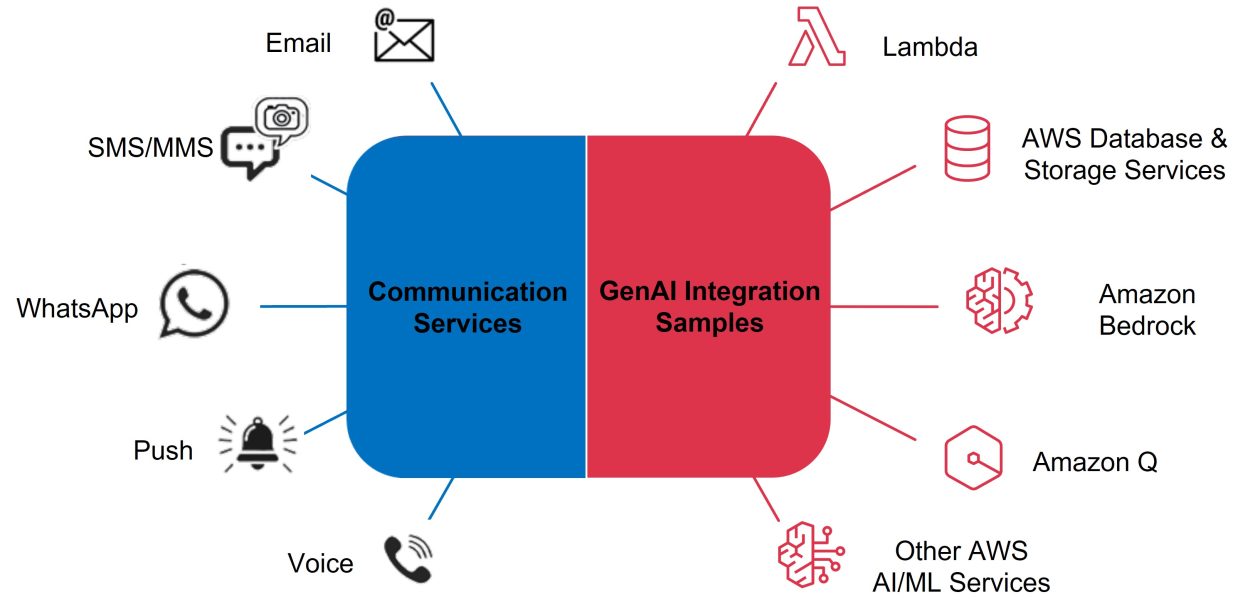
There’s a better way. Amazon Bedrock—combined with AWS End User Messaging and SES—enables enterprises to build unified communication hubs where AI handles routine inquiries across every channel, escalates complex issues to humans, and maintains full context throughout the customer journey.

Automating Email Triage with Generative AI

Automating Email Triage with Generative AI

Your team processes hundreds—maybe thousands—of emails per day. Each one needs to be read, understood, categorized, and routed to the right person.

That’s a lot of human brainpower spent on triage.

What if AI could handle that categorization in seconds? What if urgent emails automatically escalated, routine inquiries queued for batch processing, and spam silently filtered—all without human intervention?