a

Artificial Intelligence

Artificial intelligence (AI) refers to the simulation of human intelligence in machines that are programmed to think and act like humans. These intelligent machines can be trained to perform various tasks by processing large amounts of data and recognizing patterns in the data. AI can be classified into two main categories: narrow or general. Narrow AI is designed to perform a specific task, while general AI is designed to perform any intellectual task that a human can. Some examples of AI include voice assistants such as Siri and Alexa, self-driving cars, and facial recognition software.

Security and compliance
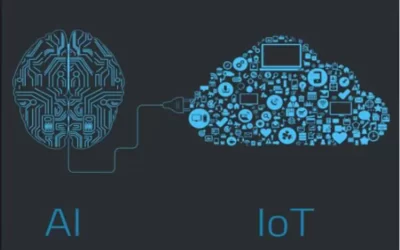
Powering IoT Devices and Edge Computing with Gen AI

Powering IoT Devices and Edge Computing with Gen AI

As the Internet of Things (IoT) continues to evolve, the integration of Generative Artificial Intelligence (AI) with edge computing emerges as a powerful synergy. This combination holds immense potential for enabling intelligent decision-making at the edge, transforming how IoT devices operate and interact. Because of the distances imposed by the allocation of IoT devices, this does introduce new challenges as to how devices are run, maintained, and protected.

Online Advertising with Artificial Intelligence

Online Advertising with Artificial Intelligence

The landscape of online advertising has undergone a profound transformation in recent years, thanks to the integration of Artificial Intelligence. One of the key factors driving this change is the emphasis on personalization. This technology will only continue to serve a crucial role in personalization strategies for elevating digital marketing efforts.

Using Stable-Diffusion and Dreambooth to create personalized AI art – Part 2 of 3

Using Stable-Diffusion and Dreambooth to create personalized AI art – Part 2 of 3

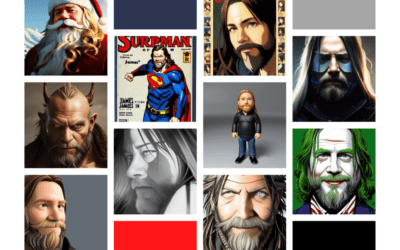
DreamBooth is a deep learning generation model used to fine-tune existing text-to-image models, developed by researchers from Google Research and Boston University in 2022. Originally developed using Google's own Imagen text-to-image model, DreamBooth implementations can be applied to other text-to-image models, where it can allow the model to generate more fine-tuned and personalised outputs after training on three to five images of a subject.